
Material Information

NATURAL MATERIALS ARE THE FIRST CHOICE
Olars Ulla largely uses natural materials. Materials that have little impact on nature during production.
The clothes are made from quality materials, and the goal is to continually increase the share of environmentally friendly materials. Here we have gathered some more information about the materials found in our collections right now and how they are produced.
FLAX
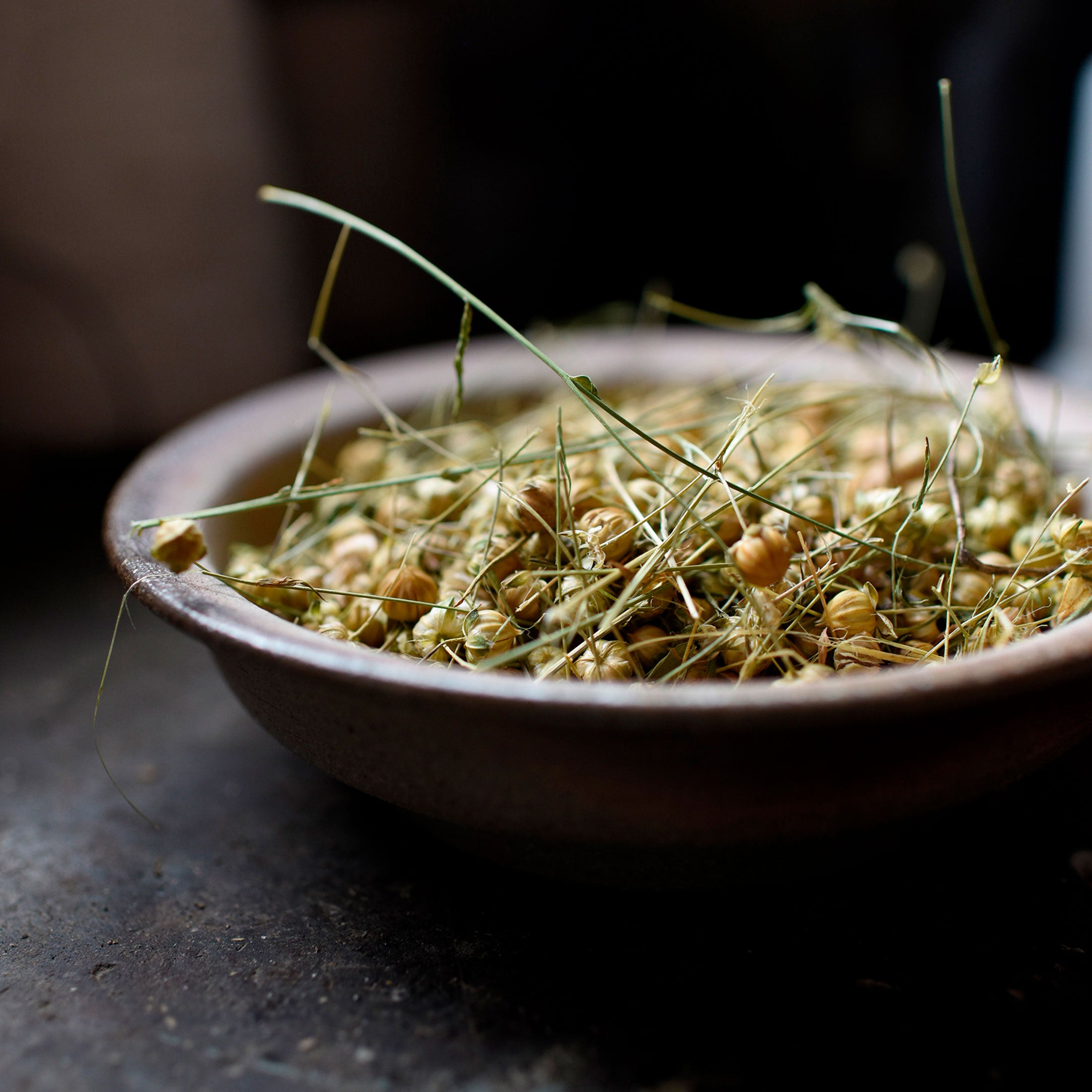
Linen fabric is made from the flax plant. Flax processing involves preparing the plant in various stages so that the long spinnable fibers inside the stalk are exposed. Flax is one of man's oldest crops and has been cultivated since at least 5000 BC. Compared to cotton, flax is gentler on the environment as the cultivation process and processing require less water. Flax can be grown in cool climates where pests are not as prevalent and the amount of pesticides can be minimized. The plant also does not require much fertilizer and therefore the impact on the environment during cultivation can be kept low.
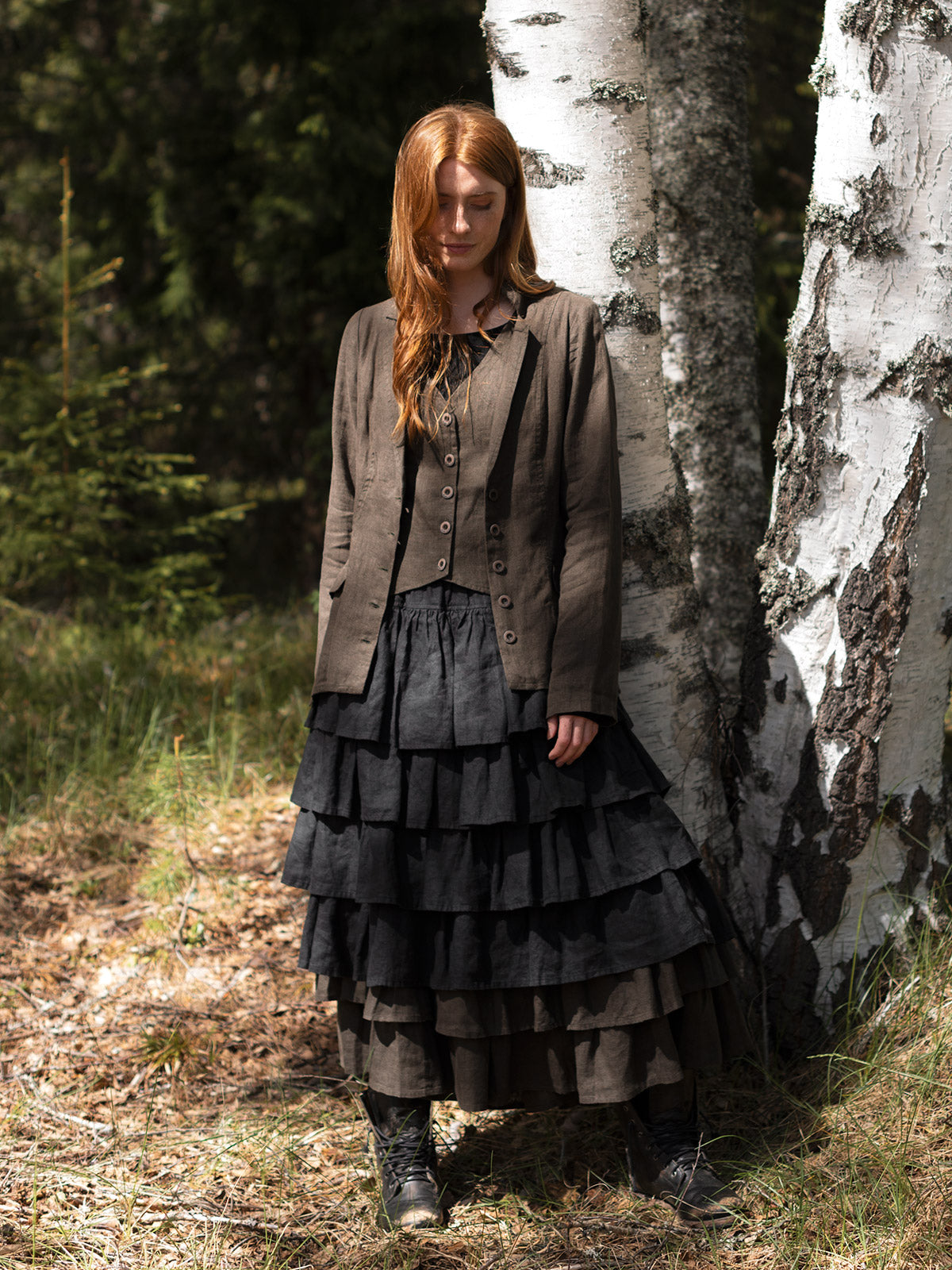
Our linen comes from raw materials that are grown, woven, treated and dyed in Europe. For each collection, we also design at least one of our own fabric patterns that we print on the linen in Europe. The garments are then also sewn in Europe. The linen's long fibers create a fabric that, if properly cared for, can survive for generations. We also love it because it only gets more beautiful the more it is used!
SOLID COLOR: In the collection we choose between five different thicknesses to ensure that the garment's natural properties are highlighted in the best way. Black and white linen is a classic for Olars Ulla and is complemented by new colors that suit this season's collection.
FLORAL: Our floral patterns can now almost be compared to a perennial, in terms of its recurring and obvious place in every collection. Our printed patterns in the form of flowers and other graphic patterns are designed by hand and the fabric is therefore unique to Olars Ulla.
HERRINGBONE: This is a slightly coarser fabric in 100% linen that has become a recurring feature in our fall collections. The herringbone pattern is available in a neutral natural/black color that goes with almost everything.
WOOL
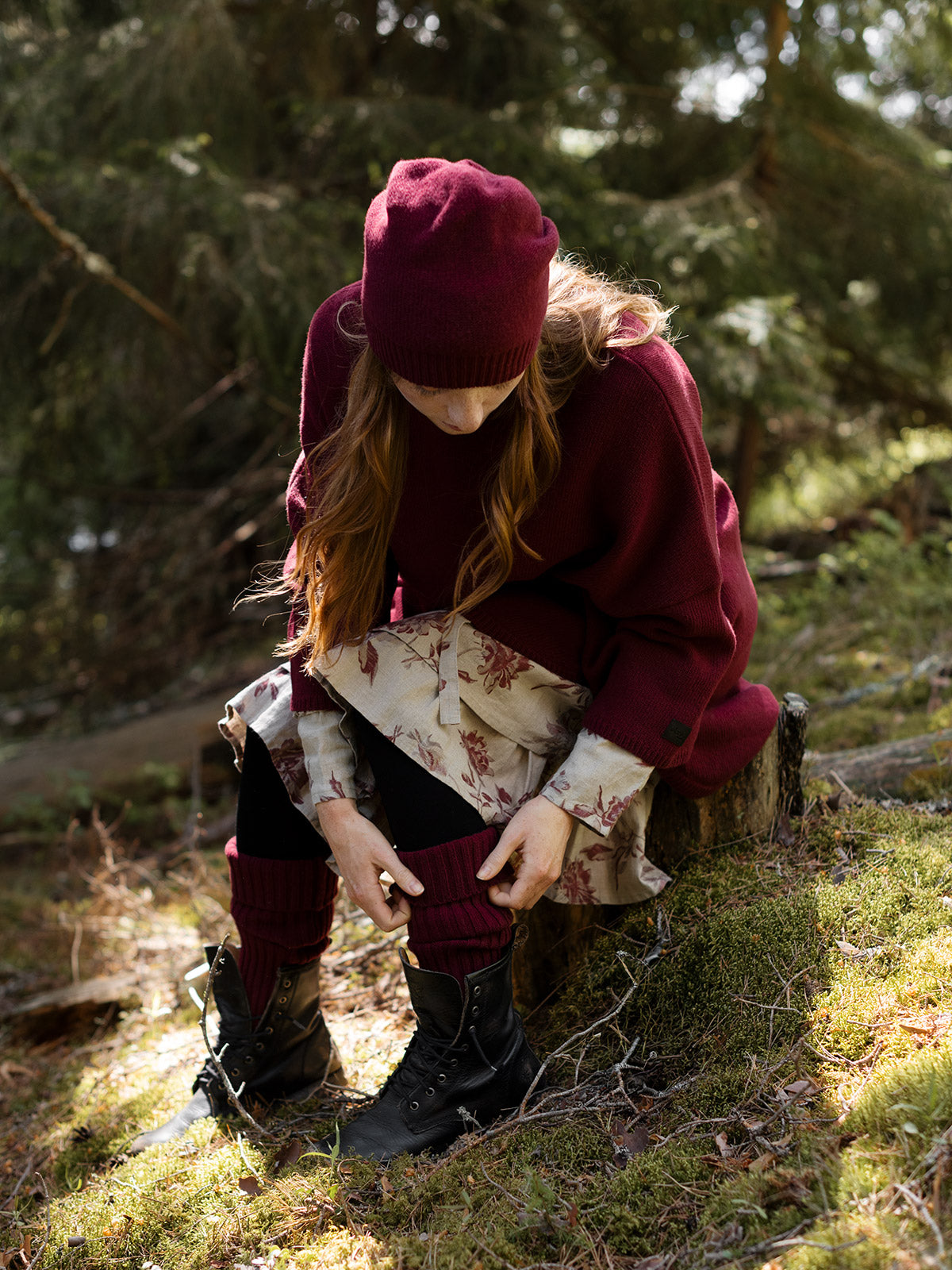
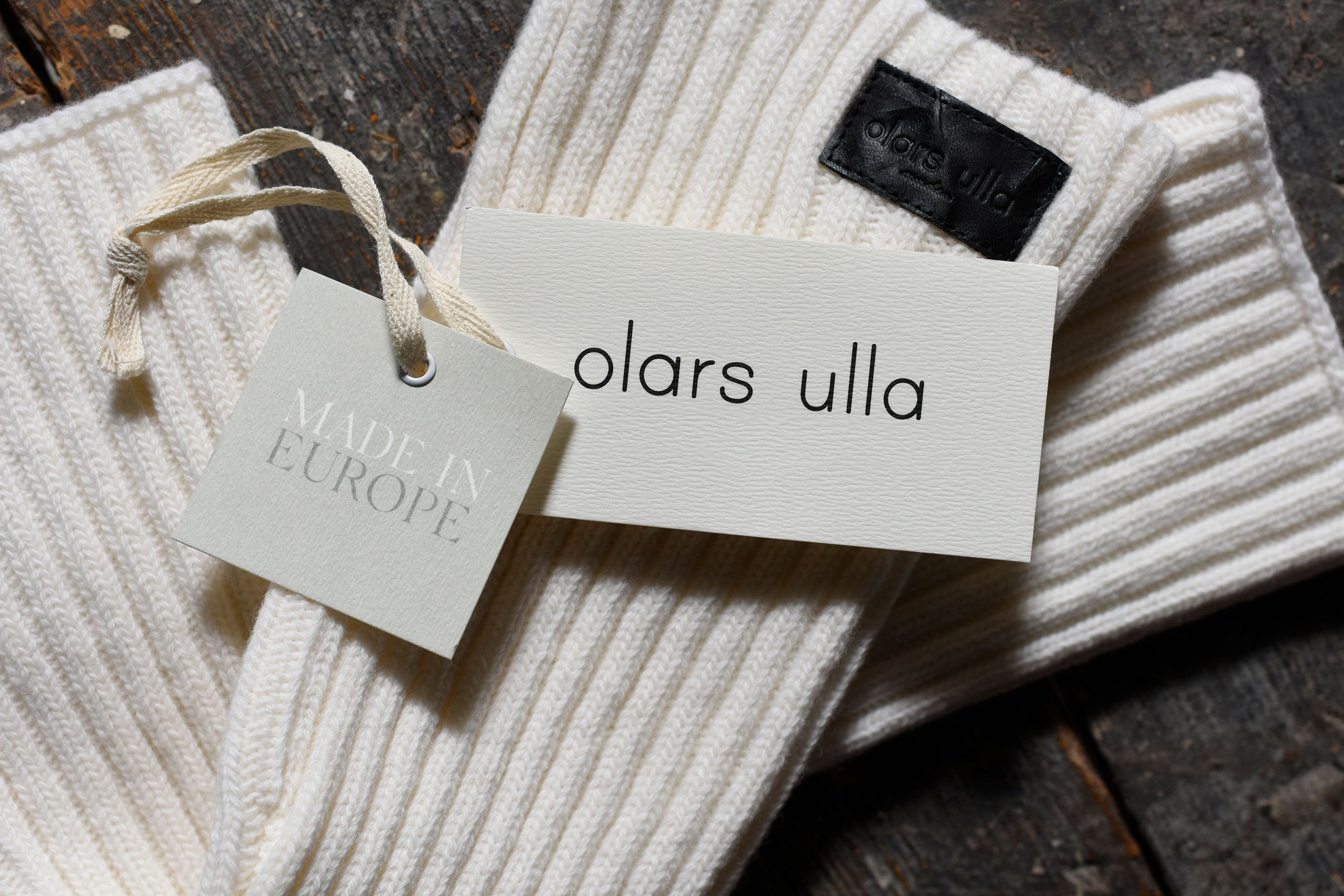
With its unique properties, wool is a remarkable raw material and a true performance material. It ventilates, insulates, and absorbs moisture all at once. Air pockets in the material enhance insulation of body heat and keep you warm. Its ability to absorb moisture also means that a wool garment does not feel damp and cold against the skin. Wool repels dirt and moisture thanks to the lanolin that coats the fibres. Therefore, wool garments do not need to be washed often, but can instead be aired in damp weather with excellent results.
All our wool garments are made from 100% mulesing-free wool or recycled wool. Mulesing, which may occur during wool production, is a procedure in which sheep are skinned around the hindquarters to prevent pest infestations. The method is animal cruelty and is often carried out without anaesthesia.
MERINO WOOL: The wool in our knitted wool garments is fine merino wool.
Wool fibres are measured in microns. For wool not to feel itchy, the value should be below 23 microns. Our wool measures 19.5 microns.
Our knitted garments in the autumn collections are made using a technique called fully fashioned. It replicates the traditional type of knitting in which the garment pieces are knitted into their final shape by a knitting machine and then sewn together. This technique is somewhat more labour-intensive than cutting the pieces from knitted panels, but results in significantly less waste during production.
All wool tends to pill, especially in areas exposed to friction, such as under the arms. The advantage of wool pills is that they can easily be removed without affecting the quality of the garment.
Other materials
VISCOSE JERSEY: This wonderful material, soft and supple to wear, while providing a perfect balance between style and comfort, is found in all our collections. Black serves as the base, complemented with white and, during the warmer seasons, also a refreshing colour.
Viscose is a regenerated cellulose fibre made from wood. The knitwear is dyed and knitted within the EU, where the garments are also sewn. The garments consist of 96% viscose and 4% elastane.
WOOL BLEND (AW24-25): The garments in the wool blend are tailored with fine details that give the pieces that little extra. Truly a material to cosy up with during the colder seasons. The fabric is durable and made of 80% recycled material.
ORGANIC COTTON: Cotton grows on bushes. It is a difficult crop to cultivate, sensitive to both climate, insect attacks, and diseases. Organic cotton is grown without chemical pesticides and artificial fertilisers. Through a cultivation method with a natural balance between several different plants and the use of natural fertiliser, an environment is created where the humus content in the soil improves and beneficial small animals and insects can live there. The natural enemies of pests thus reduce the attacks on the plants.
The fabric in our garments marked with organic cotton is made from 100% organic cotton.
HEMP-COTTON BLEND (AW25-26): This quality is found in a bold series of garments adapted for cooler temperatures. The fabric is brown with a subtle check. 55% hemp, 45% organic cotton.
Hemp has similar properties to flax. It can be grown in cooler climate zones and resists attacks without pesticides. Hemp can also advantageously be grown in the same place year after year without exhausting the soil. Instead, the plant adds nutrients to the soil.
Cotton grows on bushes. It is a difficult crop to cultivate, sensitive to both climate, insect attacks, and diseases. Organic cotton is grown without chemical pesticides and artificial fertilisers. Through a cultivation method with a natural balance between several different plants and the use of natural fertiliser, an environment is created where the humus content in the soil improves and beneficial small animals and insects can live there. The natural enemies of pests thus reduce the attacks on the plants.
HEMP-TENCEL BLEND (SUMMER COLLECTIONS): Hemp has similar properties to flax. It can be grown in cooler climate zones and resists attacks without pesticides. Hemp can also advantageously be grown in the same place year after year without exhausting the soil. Instead, the plant adds nutrients to the soil. Tencel is a fibre extracted from cellulose pulp from wood. It is soft against the skin, has a luxurious sheen and a fine drape.
The blend of these two qualities is found in the summer collection in the narrow-striped blue and white fabric.
DENIM (SS-24): The summer collection includes a denim line. The jean fabric gives a raw, untreated impression but is soft and supple, without being stretchy. Very comfortable to wear. The fabric is 100% recycled and contains 53.5% hemp, 43.8% cotton, 1.1% lyocell, 1% viscose, 0.6% polyester.
RECYCLED DENIM: To produce this yarn, jeans collected from waste of used clothes are used. Chains and buttons are removed. The fabric pieces are then reduced to fibres, which are then spun back into yarn. The yarn is not dyed but retains its original colour. This yarn is used in variants of Sipramin and Stolla.
LINING (FOR LINEN & WOOL): Our lining is a luxurious matte black fabric made from organic cotton and FSC-certified viscose. The blend consists of 53% organic cotton and 47% viscose (FSC). Since the cotton is organic, it has been grown without the use of artificial pesticides or fertilisers, and it does not contain any genetically modified organisms (GMO). The viscose, in turn, is a regenerated cellulose fibre made from wood from responsible forestry, that is, forestry that takes into account people and the environment.
The fabric is woven, treated, and dyed within the EU, where the garments are also sewn.